Today’s goal is a short post. But that’s been my goal for every other article I’ve written and I had to split one of those into three posts (and counting). So, you know, take that with a pinch of salt. My recent free time has gone toward a more-or-less completionist replay of Legend of Zelda: Breath of the Wild. That normally wouldn’t be a priority but my controller is on the fritz (again) and I’m sick of buying new ones. So this means I need (emphasis mine) to finish the game with enough time to send the controller to Nintendo for repairs before the new Pokémon Snap comes out in April.
The Switch is an easy hobby; I usually play while listening to audiobooks or with a game on in the background. Plus, easy for me to do handheld so I don’t dominate the TV when the wife wants to use it for something else. And by something else I mean re-watches of several-hundred-episode-long anime series she’s already seen. She’ll gladly sit through fifteen episodes of Inuyasha, or, if she’s in a movie mood, Lord of the Rings or Scott Pilgrim vs. the World for 11th time, but I need someone who’s more adept at start charts than I to tell me the exactly confluence of celestial bodies that signifies a period where she’s willing to watch a new movie with me.
Whatever portents needed, I had such an opening last weekend. I did my best impression of Robin Williams a la Dead Poets Society by carpe-ing the proverbial diem and throwing on Knives Out, a film I’ve been unsuccessfully lobbying to watch for the better part of a year. We had a grand time. Director Rian Johnson pays direct homage to Agatha Christie in this film set primarily in the mansion of wealthy murder mystery writer Harlan Thrombey (Christopher Plummer). Harlan is found dead, his throat slit and bloody knife is his own hand, the morning after his 85th birthday party. Though signs point to suicide, outside consultant and detective extraordinaire Benoit Blanc (Daniel Craig) discovers one-by-one that the party’s attendees, Harlan’s rather repugnant relatives, each had possible motive to do Harlan harm.
Unlike some mysteries, we quickly learn who drew the knife across Harlan’s throat (and why). What seems straightforward gets murkier following the reveal of Harlan’s will, the introduction of a blackmailer, and the ever-present but slow-simmering question of who hired Detective Blanc. Finally one last piece of evidence, expected to confirm what we knew all along, turns out differently than expected, flips our assumptions, and triggers my favorite part of any mystery story: the grand reveal. Craig’s robust southern (Louisiana? Mississippi? Kentucky?) accent plays beautifully here as he runs through my checklist of necessary items to have a well-executed grand reveal in a story.
The Manic Cusp
In which the hero is so, so close to figuring out the puzzle. They pace, they rend their clothing, tear at their hair. They rant and rave and other characters begin to question their sanity but in their hearts they know they almost have it. It should be obvious, what are they missing? Other characters may urge the hero to give it up. “We’ve already arrested someone,” or “you’re looking for something that isn’t there.” We as the reader sympathize with the hero in these scenes because we know there’s something more. Either it’s been revealed to us (but not the character) in a form or narrative irony, else we know that there’s no way they’ve solved the case with a full twenty minutes left in the episode.
Benoit Blanc (Knives Out) stares wide-eyed at the camera, musing “I spoke in the car about the hole at the center of this doughnut. And yes, what you and Harlan did that fateful night seems at first glance to fill that hole perfectly. A doughnut hole in the doughnut’s hole. But we must look a little closer. And when we do, we see that the doughnut hole has a hole in its center – it is not a doughnut hole at all but a smaller doughnut with its own hole, and our doughnut is not whole at all”! Harry spends hour after hour cooped up in his bed, watching Malfoy on the Marauder’s Map. Detective Finch (V for Vendetta) takes LSD for a trip to Larkhill to try and get inside V’s mind. Cumberbatch’s Sherlock enters his mind palace, Dr. House (with near-lethal doses of Vicodin coursing through his veins) commits wanton HIPAA violations. Nicholas Angel (Hot Fuzz) feverishly links a series of deaths everyone else assumes to be accidents together in order to give us the:
The Fake Out (or the False Reveal)
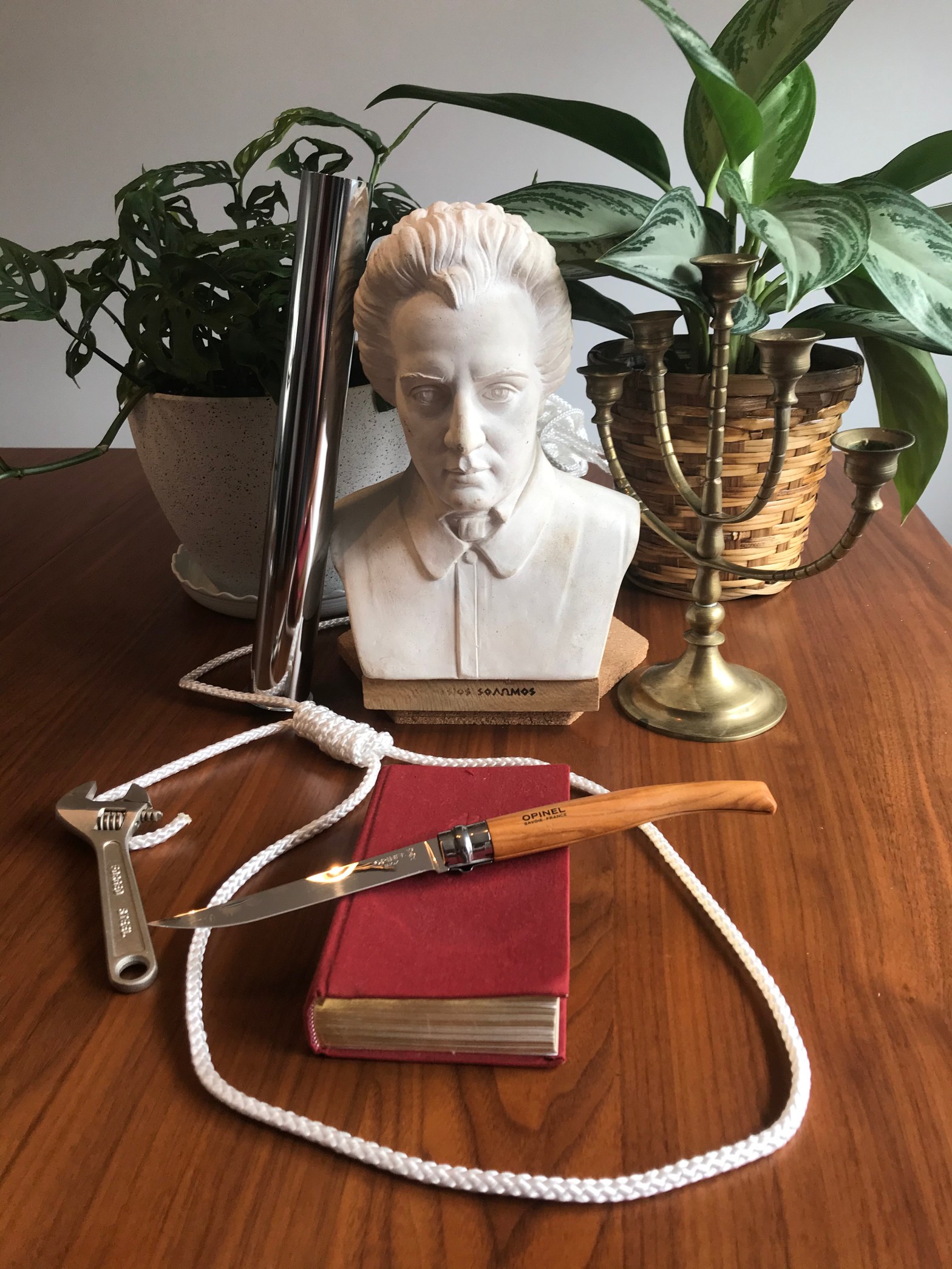
In which we, the audience, get an explanation that initially appears to tie everything up with a nice, tidy bow. This is not the same as a red herring. Don’t think Sorcerer’s Stone where we’re lead to believe Snape tried to murder Harry/take the stone for himself. Think instead Azkaban where Lupin extends a helping hand to Sirius in the Shrieking Shack, reveals he’s a werewolf, and admits he and Sirius were old school friends. Else Hot Fuzz (please go watch it if you haven’t seen it) where Angel links the killings to a prospective a property deal. In Clue, the 1985 film based on the board game of the same name (as an aside, the photo on this post has every murder weapon from the game minus the revolver), the indomitable Tim Curry mocks this step by flying through three alternate reveals in rapid succession. In all of these scenarios, the reveal is presented as if it’s true climax of the stories, the answer to all of our questions. And it would be, except for:
The Missing Piece
In which the detective, armed with one final clue, explains what really happened. Important to note: this must be done with flourish and great aplomb. After all- we need to understand why our hero has earned their reputation and/or paycheck. For Knives Out Blanc’s missing piece came when he finally puzzled out the identity of his employer. In this story as in many others, the ‘eureka’ moment or anagnorisis (what Aristotle defined as “a change from ignorance to knowledge” is his Poetics) is triggered by an outside piece of information. This can take the form of an offhand comment (Sansa mentioning Joffrey is nothing like his father Robert in A Game of Thrones) or a piece of hard evidence (a toxicology report in Knives Out, Lupin seeing Pettigrew’s name on the map in Azkaban), but either way we can now correctly point the accusing finger just in time for:
The Monologue
In which the villain makes the confession. Perhaps we, the audience, knew the what but needed the why. Else, without the monologue, how could we appreciate just how clever our villain really is? In superhero stories the monologue delays the inevitable long enough to give a final chance to avert the outcome. In still other cases, just like that Australian possum in the box of pastries, the confession serves solely to emphasize the heroes defeat. It’s too late. The villain already won. In one of my favorites (I’ll spare the title to avoid spoilers), the monologue concludes with “I’m not a comic book villain. Do you seriously think I’d explain my masterstroke to you if there were even the slightest possibility you could affect the outcome? I triggered it thirty-five minutes ago.”
Regardless this may be the most dangerous time for our heroes. In for a penny, in for a pound. The cards are on the table. Whatever idiom we want to use, this is the moment where the villain wants to either eliminate witnesses or enact preemptive revenge. Will they be successful?? No, of course not! Our hero emptied the magazine before the monologue! Or snuck that Kevlar under an exquisitely-tailored suit! It turns out, of course, the hero was one step ahead all along and just needed that extra piece of evidence (so graciously provided by the monologue and subsequent attempted murder).
Look. I know this is formulaic. But formulas are fun when executed perfectly. Add a twist, use spectacular prose or actors. Make fun of a trope in one scene and then rely on it in another. We’ve been telling stories for around 30,000 years, give or take. Knowing what to expect doesn’t make it any less enjoyable. The grand reveal is like watching gymnastics, skating, or diving at the Olympics; the athlete already declared EXACTLY what they’re planning to do. The joy is in watching the execution.
Have a favorite reveal? I would love to see examples outside of traditional mysteries or detective stories. Let me know in the comments or shoot me a note!


The reveal of Mr. World in “American Gods” is a winner for me, though I might be biased given that it’s a strong contender for my favorite book ever written.
It’s very much a traditional mystery these days, but at the time it was written “The Murder of Roger Ackroyd” had a mind-blowing reveal, and since it was one of the first mysteries I ever read it had pretty much the same impact on me as it would have had on readers of the time. Almost all Poirot novels are worth it for their reveals alone, even the phone-ins are delivered with so much panache it’s a fun ride.
Finally, there are a couple classic video game examples from Bioware in the early 2000s: Darth Revan in “Knights of the Old Republic” and Sun Li the Glorious Strategist in “Jade Empire” have unforgettable reveals.
Loved the cover photo, by the way!
LikeLiked by 1 person
Thanks Connor! Huge, huge fan of American Gods (and Neil Gaiman in general). I haven’t given the show a try yet but I’ve heard good things. And I’m not above logging into the parents’ Starz account.
I’ve read so few actual mystery stories- I think I missed getting exposed to Hardy Boys or Nancy Drew as a kid but I definitely want to give them a try. And I haven’t spent as much time talking about videogames on here yet but Horizon Zero Dawn hit a few of those same notes for me too.
LikeLike