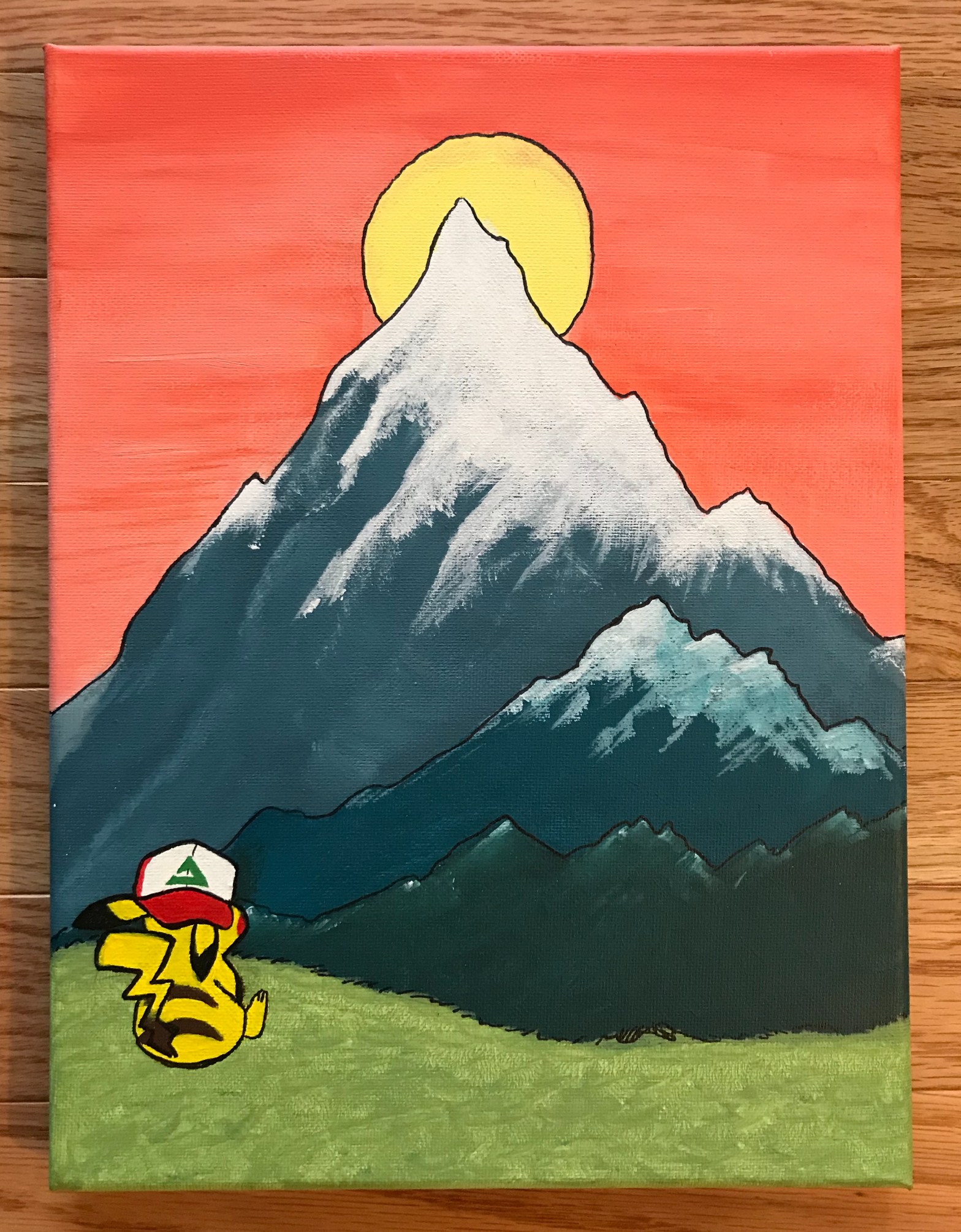
Spoiler alert one: I’m not going to come to a coherent conclusion on whether I’m pro-or-anti-spoiler. Spoiler alert two: I plan to spoil Pokémon Silver Version and Harry Potter and the Half Blood Prince, a videogame and a book that came out 22 and 16 years ago, respectively. Just in case you have an exceedingly long statute of limitations on the ending of works of fiction.
Conversations where one or both parties are trying to avoid spoilers are wonderfully fascinating opportunities for social observation. Easy solution is obviously just avoid the topic all together but that’s not nearly as fun. Instead, watch where someone tries to draw that line. From the perspective of the storyteller you’ll hear everything from “we can just wait until you finish it” to “I’m not going to spoil it, but [blow-by-blow recap of every major event].” Some stories have a very obvious climax or twist that becomes the clear candidate to serve as ‘spoiler’ but still others you get to see what someone values in a story by what they choose to reveal. Is this piece of information important enough to withhold? How do I give my thoughts on the book or movie or show without revealing certain information?
It’s not easy. I don’t envy those attempting to write spoiler-free reviews for a living. I made a conscious decision (for now. My $48/annually, my prerogative) to not use this space for book reviews but I did recently write one for an Instagram account I set up alongside the blog. How do you share enough to give the gist of the story and pique interest without ‘ruining’ the experience? Are the first five minutes of the show fair game, or the first thirty pages of the book? Can you say which characters make an appearance, or even something as benign as ‘so and so grows on you’? Mind you everything I’ve mentioned to this point includes consensual spoilers; I don’t always mind spoilers, but I would rather at least have the chance to decide for myself. And- that’s getting harder and harder. The largest spoiler threats used to be overheard watercooler talk or else teenagers driving by Harry Potter book releases yelling “Snape kills Dumbledore” out the window (side note: why would you do that? That’s not a prank. Good pranks leave everyone laughing at the end).
Now some spoilers are almost impossible to avoid. I love the Great British Bakeoff (and have a crush on someone every series) but have to stop following old contestants on social media during new seasons else risk learning results before the episodes air. Generic internet searches are nightmares. I stay well away from Twitter as a general matter of policy but things trickle through anyways. I even had something from the latest season of The Mandalorian revealed in a company-wide email newsletter. I know a lot of that is self-inflicted, but I do wonder if we’ll ever see a difference in the way shows are written to gear more toward audiences who may hold off for several weeks and binge all at once. BUT. Enough of that for now. I don’t have a solution. I don’t expect you do either. So, let’s instead talk about how the experience varies with and without spoilers.
Let’s skip spoilers, or how my best moment in a videogame was two decades ago and I’m still chasing that high
Let’s take a little trip together. It’s 2009, I’m 9-10 years old. I probably had a bologna, Kraft single, and mayo on potato bread for lunch. I’m sitting on the couch, GameBoy Color in hand. That purple one with the transparent casing. Pokémon Silver Version, the first sequel to the original games, is in the game slot. I already beat the eight gym leaders in Johto, then the Elite Four, then eight more in Kanto. I finally have in-game permission to tackle the eponymous Mount Silver. Now, here’s the catch. I have no idea what to expect when I reach the top of the mountain. I don’t even know why I’m there, only that I wasn’t allowed into this part of the map until this moment. The internet doesn’t exist in its modern iteration. We’re two years until Wikipedia, four years until Myspace. The only real way to have a game spoiled for you is to ask your parents to buy the companion guide or have a friend with an older sibling beat the game quicker than you. So I fight my way through the mountain, my team a well-oiled machine. High-level Pokémon, type advantages for anything I might face. Finally I reach the summit. I see someone at the end of a long path, rendered in 16-bit glory. The character looks a little familiar. I freeze for a moment, then slowly walk up to him and press A. He turns to face me, there’s no dialogue, just ellipses on the screen. But the music starts, the main battle theme from the original games (Red and Blue) and it’s him. Trainer Red. The protagonist of the first games (on whom the character Ash is based). The battle begins.
This was over twenty years ago and I’m still not fully over it. I’ve played some wonderful videogames over the years, fantastic visuals and lore and all of that but this is still my favorite moment bar none. My wife even painted that image I used for the photo in this post (Red’s Pikachu looking up at Mt. Silver) as a gift for me. I had no idea what to expect, I was just along for the ride. It was perfect and simple and I wouldn’t have enjoyed it nearly as much had I known what was coming. That’s my first argument against looking up spoilers. Having that moment in story where you’re generally surprised. Joy or outrage, relief or horror. But simply experiencing that moment for the first time.
The second argument against spoilers is the rare chance of being a part of the zeitgeist. These moments are few and far between. The midnight releases of the Harry Potter novels followed by a day of binge reading were one for me. Or the first time all of my friends faced The Flood in the Halo level 343 Guilty Spark. Or the standing calendar invite I had with a few friends at work to discuss (the good seasons of) Game of Thrones. Encountering something for the first time, the same way and the same time as everyone else, generates a similar feeling to those I’ve had being part of a team, or meshing with a new friend.
I don’t like where you going with this, so I’m going to look it up
I will unabashedly confess to, on occasion, looking up spoilers. It’s rare. I’ll sometimes do it when I’m half-paying attention to a show or movie and want to see what happens so I can continue doing something else. But I’d rather focus on spoilers for stories in which I’m legitimately invested. Not to disavow agency over my own actions but I do think I only look up an ending if the storyteller failed to maintain suspension of disbelief. If there’s a twist that makes no sense given the rest of the story, or people acting in ways wildly inconsistent with their character, I’ll be brought out of the story and need assurance of an eventual payoff to get me reinvested. I’m not claiming to have an opinion on rhetorical devices but it drives me crazy when your first person narrator has a secret plan that’s also secret from you, the reader. So-and-so is going to die, but really we were working with the other guy all along (but you didn’t know that!!!!!), so he’s not really dead, and now we’ve infiltrated the base. We’re allowed to be surprised by other characters in a story, but if the narrator withholds too long, I’m looking up what happens.
All that aside I don’t hate knowing the ending of a story before I get into it. If the plot itself is good, I can appreciate the little details or bits of foreshadowing. Think about the value of a reread- catching those pieces you missed the first time around either because you were sprinting toward the finish or else, without the final reveal, the clues seemed inconsequential at the time. Second benefit of spoilers- when the plot is not good. I’ve definitely enjoyed the occasional trashy set of novels (looking at you, The Warded Man series), but I’m thinking more movies/shows for this category. So much goes into an on-screen story. Acting, score, visuals, all of it. I’ve had occasions where I’ve loved a movie or show despite the story itself falling rather flat. Knowing the (bad) ending ahead of time lets me appreciate the other elements rather than stewing too heavily on the shortcomings of the writing.
Absolutely nothing can salvage the final season of Game of Thrones, but, after it became apparent the writing was going off the rails I caved and looked up the spoilers that had been floating around the better part of two years. After a solid 1-2 hours of uninterrupted incredulity at the decision-making process, I was able to watch the last few episodes and try and appreciate the actors and designers and everyone else who put a solid decade of their lives into making something. I almost succeeded. But still. It would have been worse otherwise.
Do you seek out spoilers? Have a particular memory of something being spoiled for you? Does the medium (show, book, etc.) make a difference? Let me know!
 Twenty-five Hundred Stories
Your description of talking around spoilers reminds me of the Friends episode where Joey and Rachel are reading Little Women and The Shining and spoil them for each other. – I generally don’t want or search for spoilers, but I hadn’t thought of the “let me down now so I can enjoy other aspects” aspect of them. I’ll have to keep that in mind! Great post!
LikeLike